
7C3E:
From the Vision
of Mobility to the Future of E-Highways
Translating India’s 7C vision of mobility into an Electric, Electronic and Efficient highway ecosystem.
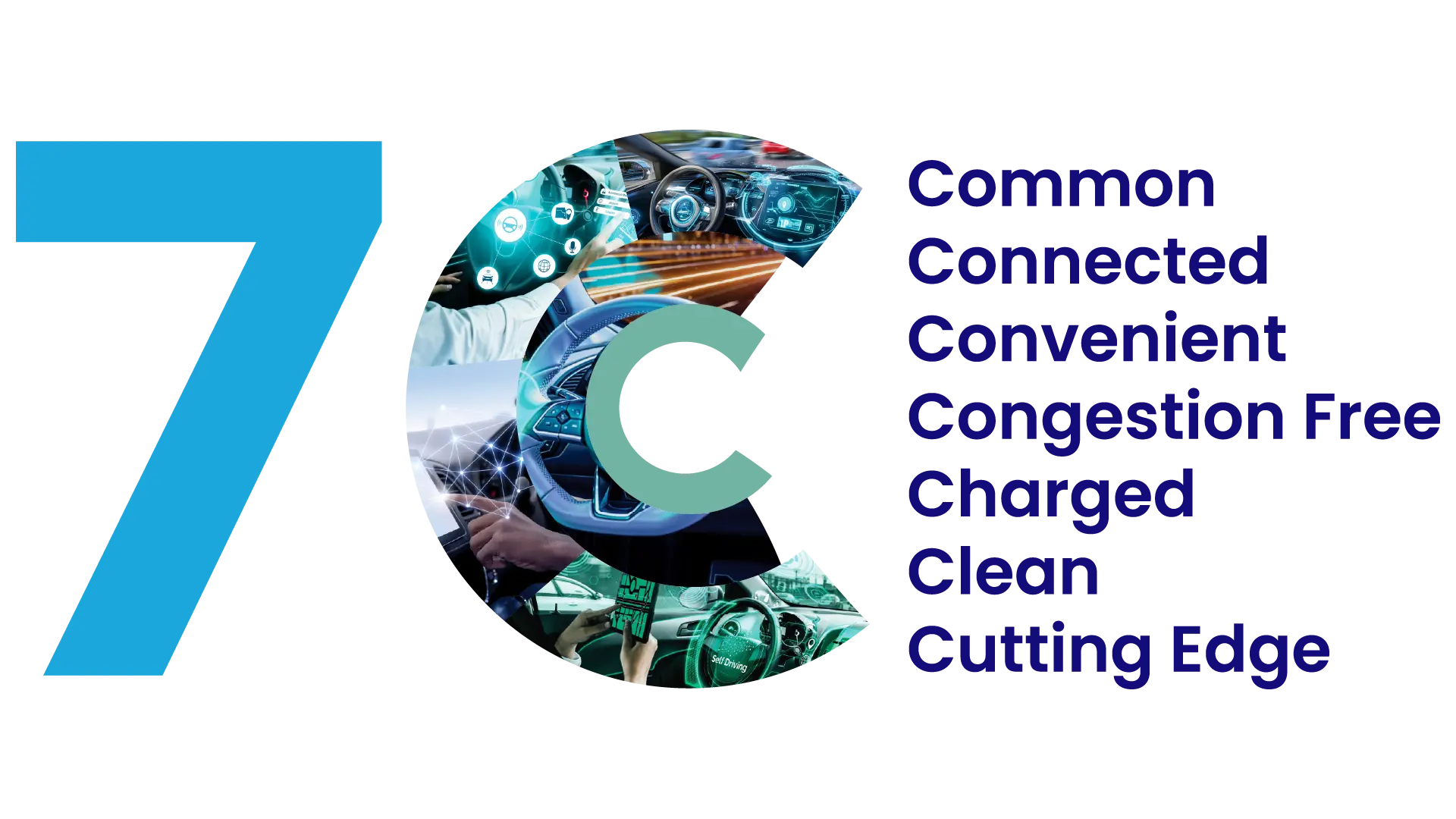
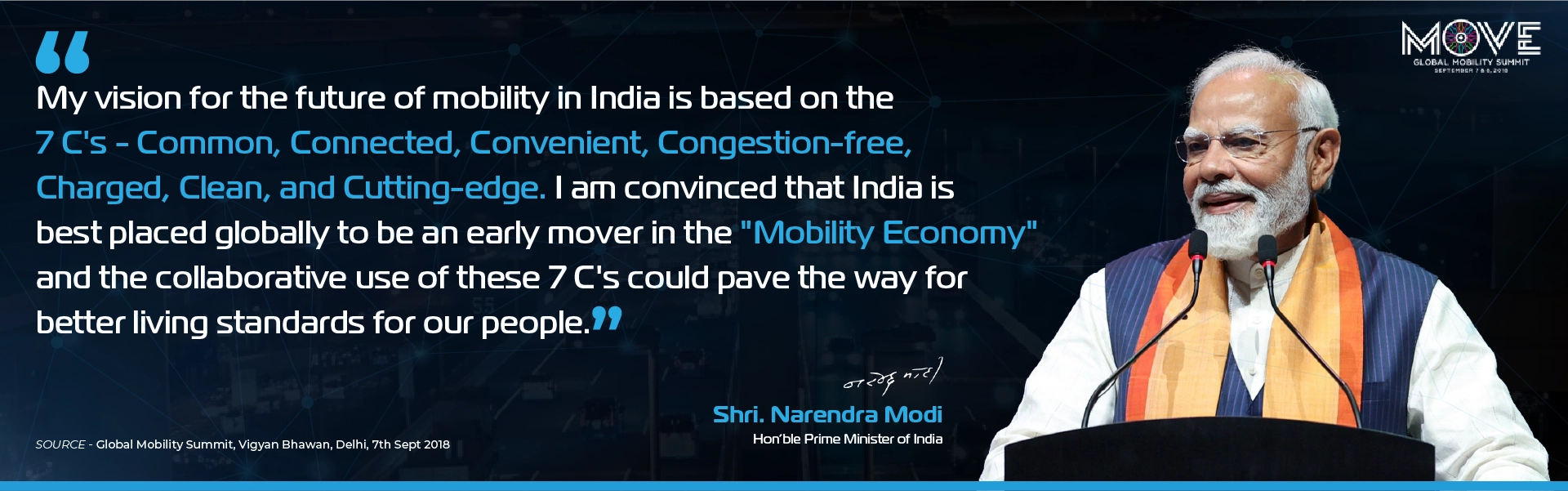
The Origin: Hon’ble Prime Minister’s Vision of 7C
The vision called for a mobility ecosystem that would serve people inclusively, connect geographies and modes of transport, improve accessibility, reduce congestion, advance electric mobility, protect the environment and encourage innovation.
It also presented India with an opportunity to develop scalable mobility solutions that could serve the needs of a growing economy and become a model for the world.
Understanding the 7C Framework
The seven Cs establish the principles that a future-ready mobility ecosystem must work towards.
Common
Mobility that serves everyone, with public transport at its core and solutions extending beyond private cars to buses, two-wheelers, three-wheelers and shared mobility.

Connected
Seamless integration of geographies, transport modes, infrastructure and digital systems to enable people and goods to move more efficiently.

Convenient
Mobility that is safe, affordable, accessible and dependable for all sections of society, including women, senior citizens and persons with disabilities.

Congestion-free
A mobility network that reduces bottlenecks, improves traffic flow and minimises the economic, environmental and human costs of congestion.

Charged
An ecosystem that supports electric mobility through accessible charging infrastructure, energy systems, battery technologies and commercially viable operating models.
Clean
Mobility powered by cleaner energy and more sustainable transport systems, helping reduce pollution and support better environmental outcomes.

Cutting-edge
Mobility that continuously advances through innovation, emerging technologies, intelligent systems and new business models to address future transportation challenges.

Together, these principles provide the vision. The 7C3E framework seeks to translate that vision into an integrated highway ecosystem.
What Is 3E?
The three Es represent the infrastructure and technology dimensions of next-generation highways: Electric, Electronic and Efficient.
Electric Highways
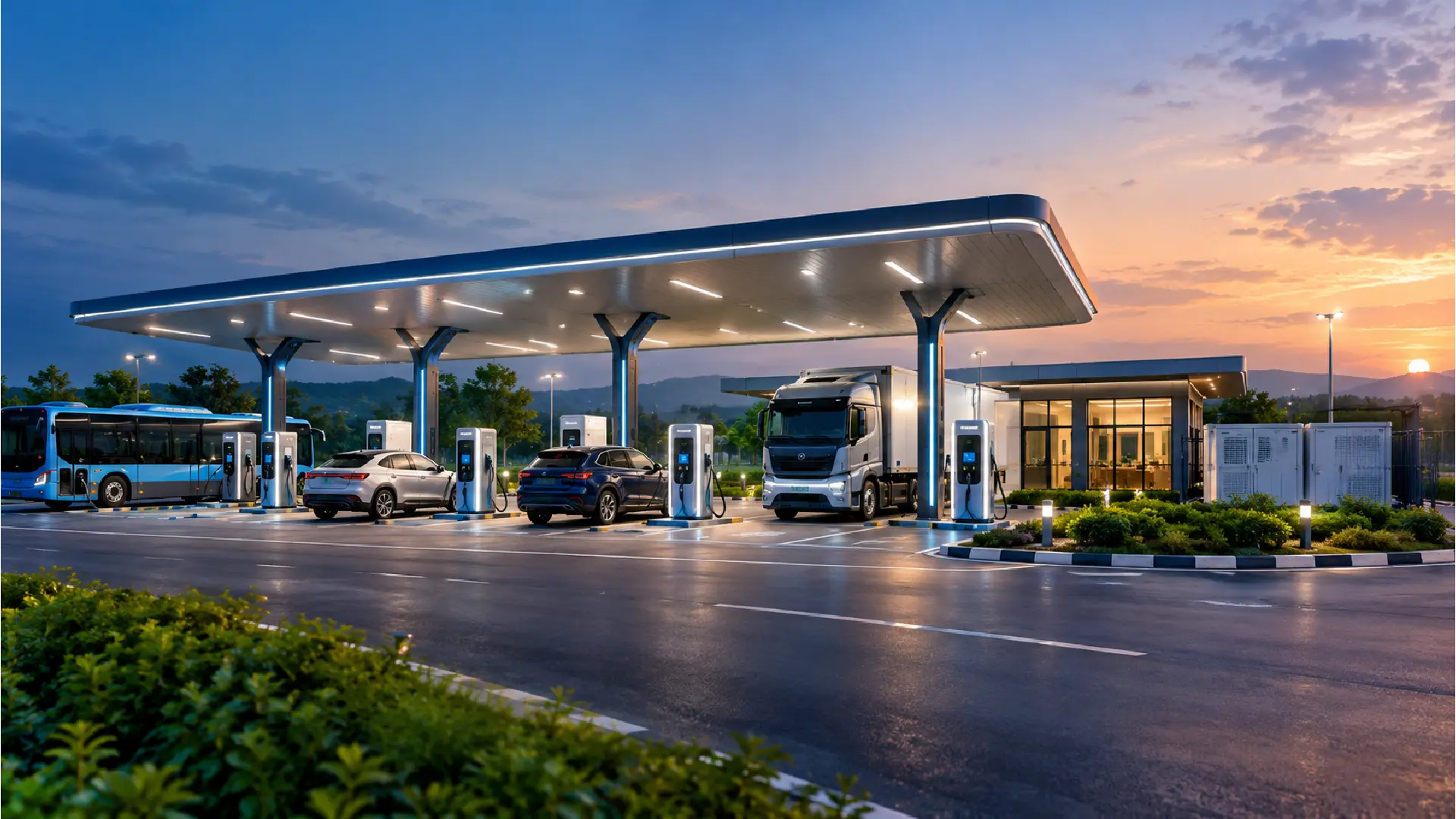
Highways equipped to support electric passenger mobility and freight transportation through charging infrastructure, energy stations, battery-swapping systems and supporting energy networks.

Electronic Highways
Digitally enabled highways supported by connected systems, intelligent signalling, data integration, monitoring, digital governance and technology-led coordination of infrastructure and operations.

Efficient Highways
Highways designed to improve infrastructure utilisation, reduce operational friction, support dependable freight movement, optimise resource deployment and enable commercially viable, scalable mobility services.

The three Es work together rather than independently. Electric infrastructure provides the energy backbone, electronic systems enable coordination and visibility, and operational efficiency helps make the overall model more practical, reliable and scalable.
What Is 7C3E?
7C3E brings the seven principles of future mobility together with the three pillars of next-generation highway infrastructure.
While 7C defines the outcomes that mobility should deliver, 3E focuses on the infrastructure, technology and operating systems that can help deliver them.
The framework connects inclusive and accessible mobility with electric energy infrastructure, digital governance, operational integration and sustainable business models.
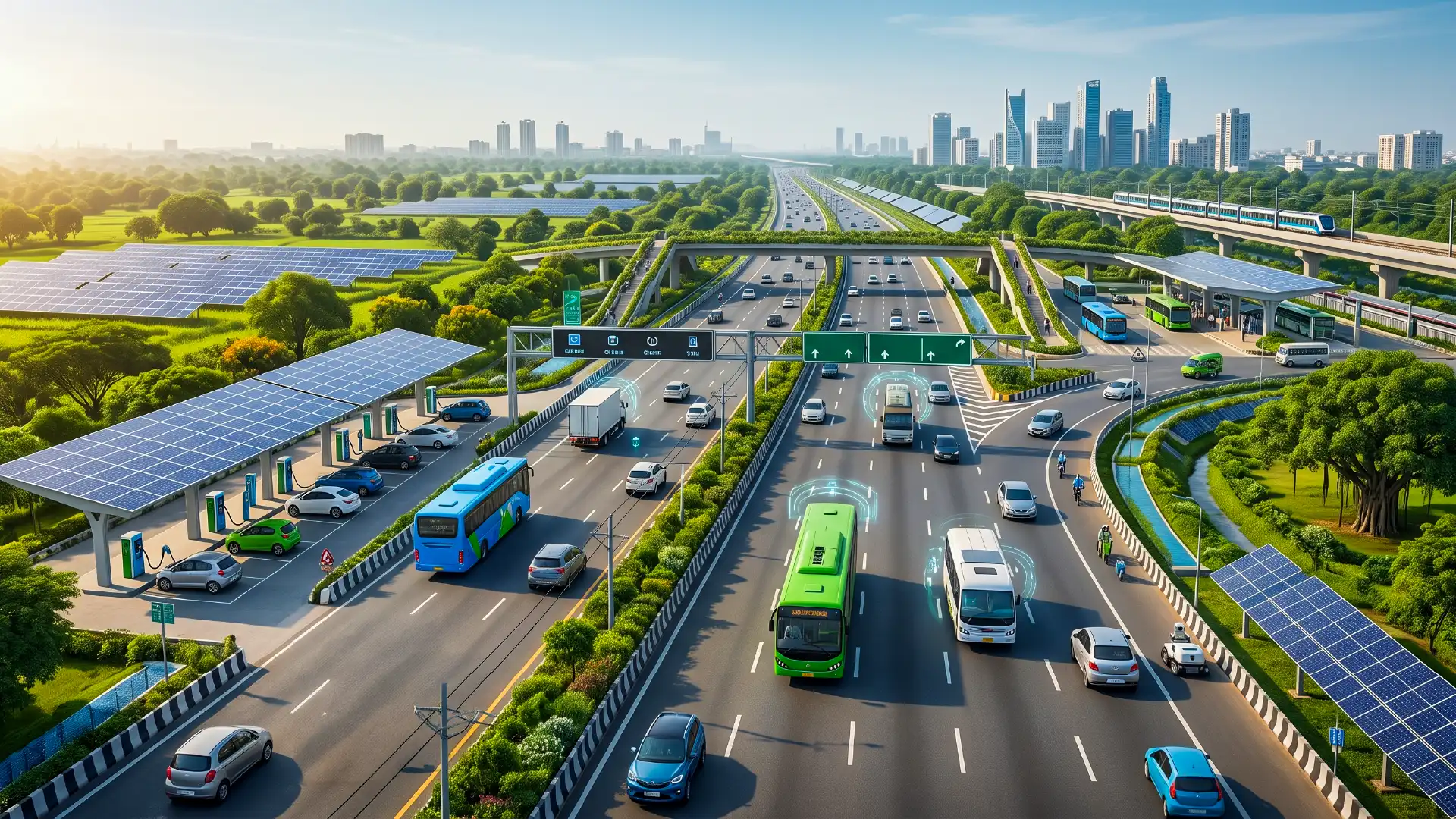
Under this approach, a highway is not viewed merely as a stretch of road. It becomes a connected mobility and logistics ecosystem that can support electric vehicles, passenger travel, freight transportation, roadside assistance, intelligent operations and integrated energy services.
The 7C3E vision is therefore about moving beyond isolated infrastructure assets towards a coordinated, technology-enabled highway network.
NHEV’s Journey: Working Towards the 7C Vision
Following the Prime Minister’s 7C vision at MOVE 2018, the National Highways for Electric Vehicles (NHEV) initiative began translating the principles of future mobility into a practical, technology-led highway transformation model. What started with technical validation and prototype development evolved into freight electrification trials, national network planning, institutional coordination and preparation for large-scale implementation.
Through successive technology trials and infrastructure development programmes, NHEV has worked towards advancing the first six Cs of the 7C vision, while building the technological and operational foundations required to achieve the seventh C — Cutting-edge.
2020 — Establishing the Technical Foundation
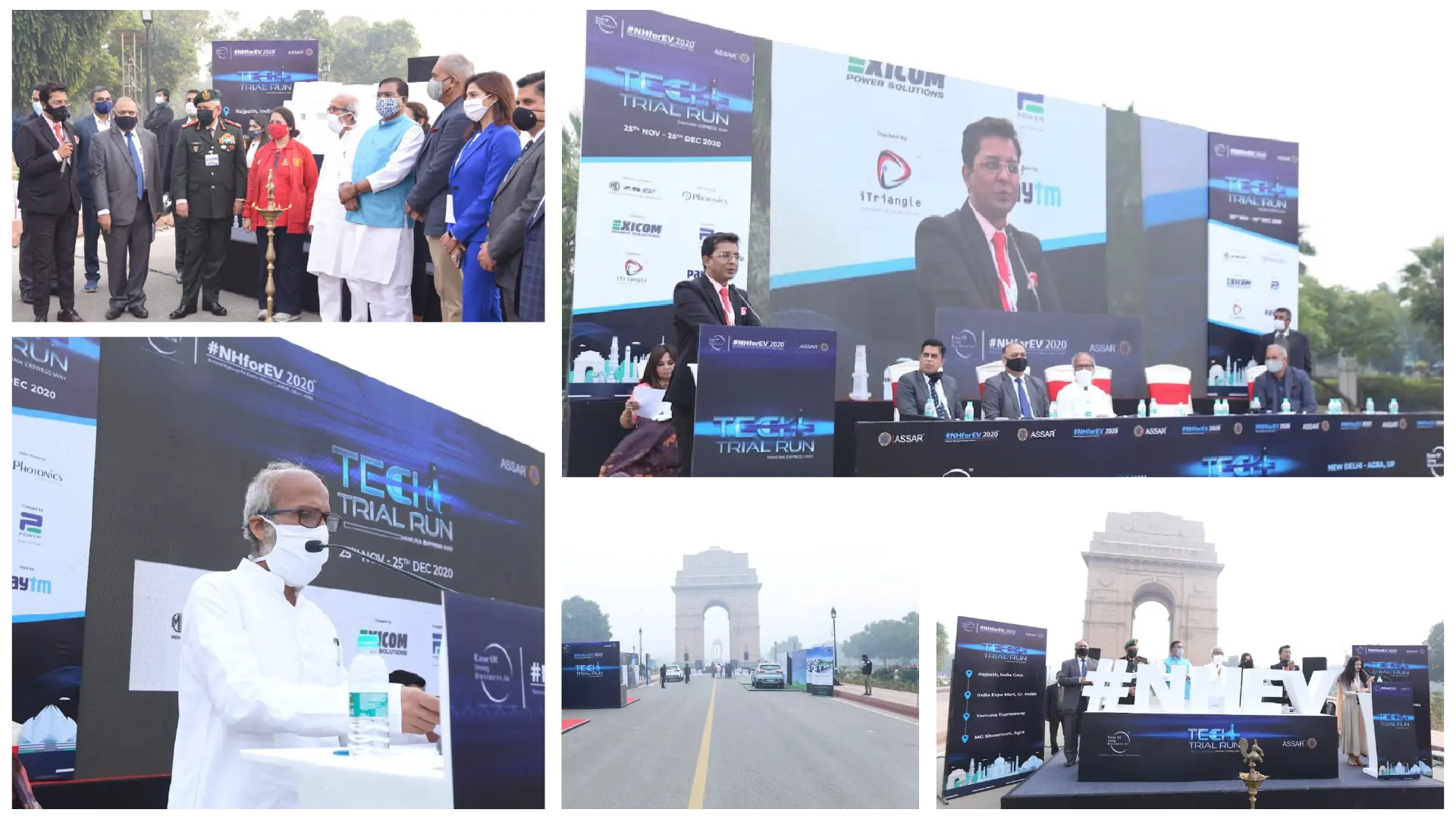
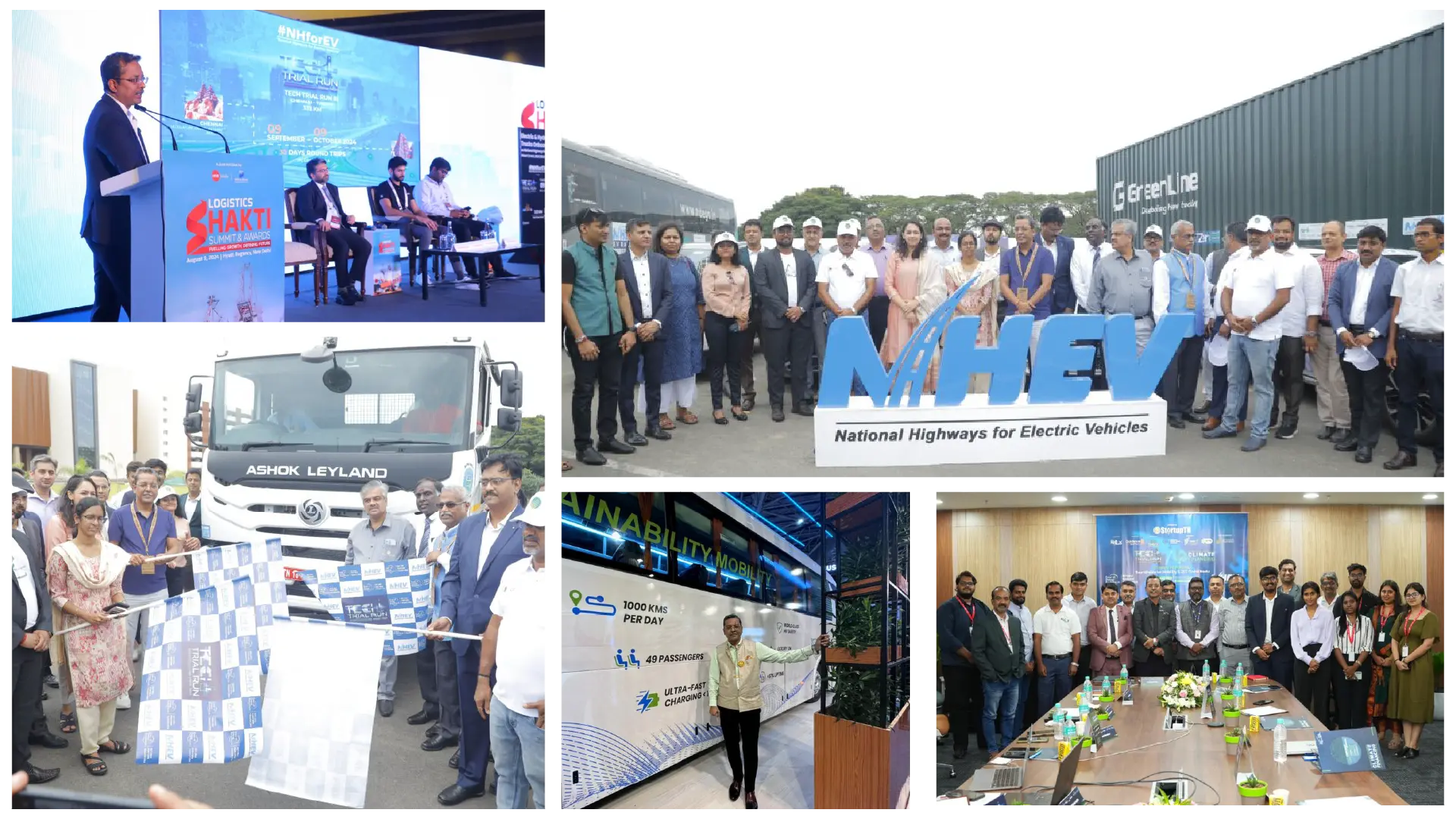
NHEV conducted Tech Trial Run I on the Delhi–Agra Yamuna Expressway to validate the feasibility of long-distance electric mobility. The trial evaluated vehicle and charger interoperability, charging behaviour, energy consumption, vehicle range and highway operations using electric buses and SUVs.
This phase helped establish a charging infrastructure planning model based on strategically spaced charging stations, integrated roadside assistance and future-ready highway energy infrastructure. In parallel, government policy began moving towards the deployment of public EV charging infrastructure along National Highways and Expressways.
2021 — Developing the Prototype Model
Building on the initial technical validation, NHEV conceptualised two prototype charging stations to assess high-capacity charging operations, power distribution, station layouts, passenger movement, operational readiness and commercial scalability.
The focus shifted from testing electric vehicles on highways to developing the infrastructure and operating models required to support their sustained use.
2022 — Demonstrating the E-Highway Concept
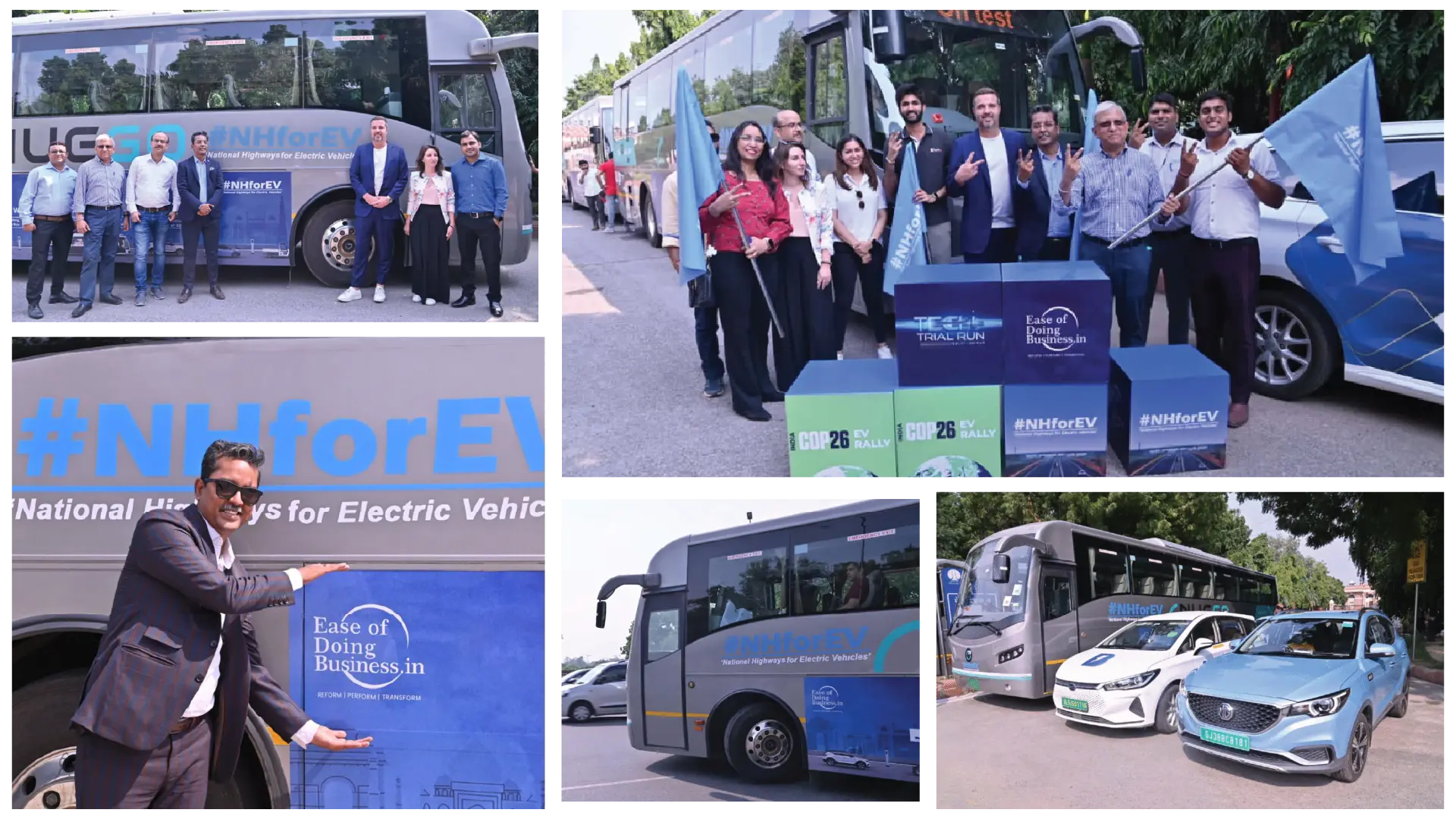
NHEV advanced its E-Highway proposition through further technology trials and public demonstrations, including the Delhi–Jaipur Expressway Tech Trial Run II. The initiative brought greater attention to the potential of electric highway infrastructure, heavy-duty vehicle electrification and integrated charging-station operations.
These developments helped move the conversation from the feasibility of electric mobility towards the practical requirements of electrifying long-distance passenger and freight transportation.
2023 — Planning the National E-Highway Network
NHEV initiated detailed planning for a national rollout, including the proposed development of 271 3G Energy Stations, the 7C3E E-Highway Management System (EHMS), refinement of the Connected Commercial Vehicle (CCV) Protocol, and the expansion of the Technology, Products & Services (TPS) framework.
The programme also incorporated renewable-energy integration and Battery Energy Storage Systems (BESS) into its planning approach. Heavy electric trucks and private land acquisition remained important areas to address for the proposed national implementation.
During this period, parliamentary records also provided important institutional context for the development of electric highways, charging infrastructure and alternative-fuel facilities.
2024 — Validating Heavy-Duty Electric Freight
Tech Trial Run III, conducted on the Chennai–Trichy route, expanded the scope of validation to electric trucks and heavy commercial vehicles.
The trial examined freight economics, heavy-duty charging infrastructure, logistics integration, cost per tonne-kilometre and operational performance across passenger vehicles, buses, logistics fleets and heavy commercial transport.
This phase broadened the programme beyond passenger mobility, addressing the requirements of freight electrification and the operational viability of electric commercial transportation.
2025 — Transitioning from Validation to Implementation Planning
With three technical trials completed, NHEV transitioned from prototype development and technical validation towards national implementation planning.
The programme focused on standardising 3G Energy Stations, strengthening the Annuity Hybrid for E-Mobility (AHEM) model, expanding the Technology, Products & Services framework, implementing the 7C3E E-Highway Management System, operationalising the Connected Commercial Vehicle Protocol, and strengthening Roadside Assistance (RSA) and On-Road Services (ORS).
This marked an important shift from proving individual components to planning an integrated highway ecosystem capable of supporting coordinated infrastructure and services at scale.
2026 — Commencing Phase I
In April 2026, NHEV entered the commencement phase of its national implementation programme, with zone-wise planning, infrastructure development and ecosystem expansion.
Activities included land identification, statutory approvals, engineering design, digital infrastructure planning, renewable-energy integration, utility coordination and implementation planning for the proposed national rollout.
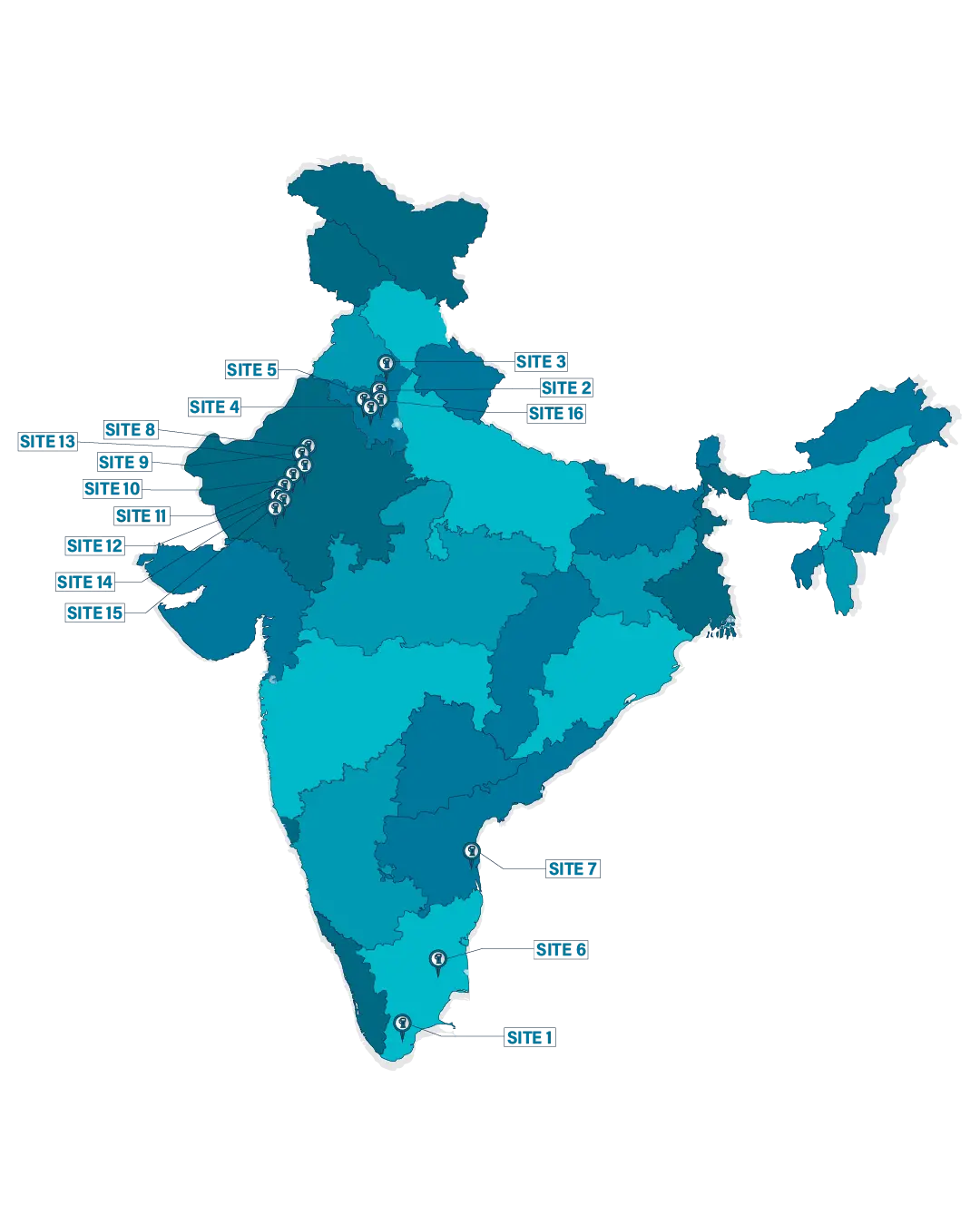
Phase I targets the development of 16 strategic 3G Energy Station locations, establishing a foundation for the larger proposed network of 271 3G Energy Stations across a planned 5,500 km E-Highway network.
This phase represents the transition from planning and validation towards coordinated infrastructure development and implementation.
Six Cs: Progress Through Implementation
Common
Advancing electric mobility models that extend beyond individual vehicles to passenger transport and freight movement.

Connected
Developing corridor-based approaches that bring together highways, energy infrastructure, digital platforms, service providers and logistics stakeholders.
Convenient
Working towards more accessible charging, roadside assistance and integrated on-road services for electric mobility users.
Congestion-free
Exploring technology-enabled highway operations and more efficient freight movement to reduce avoidable delays and operational friction.
Charged
Advancing the development of electric highway infrastructure, 3G Energy Stations and supporting energy systems for electric passenger vehicles and heavy-duty freight.
Clean
Supporting the transition towards electric transportation and zero-emission freight operations through cleaner energy and sustainable mobility models.

These efforts represent progress towards the principles of the 7C vision. Their continued development, deployment and validation remain essential to achieving mobility outcomes at scale.
The Road Ahead — Achieving the Seventh C
The journey from 2020 to 2026 has established a foundation for advancing Common, Connected, Convenient, Congestion-free, Charged and Clean mobility through electric highway infrastructure, tech trial runs, digital governance and integrated service models.
The next frontier is Cutting-edge — the seventh C of the Prime Minister’s vision. NHEV’s next two planned technology trials, targeted for 2028 and 2030, are intended to further validate the integration of infrastructure, connected systems, energy services and operational models under real-world conditions.
These milestones represent the next stage in the evolution of the 7C3E framework: moving from technical validation and implementation planning towards an integrated, technology-enabled E-Highway ecosystem.